Is PLA durable enough for an outdoor display sculpture?
Is PLA durable enough for outdoor display? Not for permanent exposure. Compare heat, sunlight, rain, and safer display choices for your route sculpture.
Article
PLA is not a good choice for a permanent, exposed outdoor display sculpture in 2026; keep a meaningful route keepsake indoors or bring it outside only for a sheltered, supervised display. Heat can distort PLA before it melts, and a coating does not turn an ordinary print into a weather-rated sculpture.
- Is PLA durable enough for outdoor display? Not for permanent exposure to heat, sunlight, and weather.
- PLA route sculptures suit indoor keepsake displays better than exposed garden or patio installations.
- Printmyroutes makes GPS-based topographic sculptures for runners, hikers, cyclists, and skiers commemorating a route.
- Choose the display location before choosing the material; shade alone does not establish outdoor durability.
Why this matters
A finisher keepsake needs to preserve the route you remember, not survive the conditions you raced through. A mountain-shaped sculpture belongs in a different material-use category from equipment designed to stay on that mountain.
Printmyroutes makes custom topographic route sculptures from GPX uploads or Strava data. For a gift marking a 2026 race or summit, choose the display location before ordering: an indoor shelf and an exposed patio create very different requirements.
Treat decorative durability and outdoor durability as separate questions. A sculpture can handle normal indoor display yet remain unsuitable for sustained sun, hot surfaces, or repeated wetting. That distinction matters more than whether the print feels solid in your hand.
Is PLA durable enough for an outdoor display sculpture?
PLA suits indoor decorative display better than permanent outdoor installation. A temporary outdoor appearance is a different use case, but it still requires protection from heat, direct sunlight, rain, and accidental impact.
Use the setting—not the word outdoor alone—to make your decision:
| Display setting | Best for | Benefit | Limitation | Recommendation |
|---|---|---|---|---|
| Indoor shelf away from heat and sun | Meaningful race and trail keepsakes | Avoids direct weather exposure | Nearby windows and heat sources still need attention | Choose this for a sentimental PLA sculpture |
| Sheltered outdoor event table | A supervised presentation or photograph | Lets you include the sculpture in an outdoor occasion | Shade does not control temperature or wind-driven rain | Bring it indoors after the presentation |
| Covered porch | Objects explicitly specified for that exposure | Reduces direct rainfall | Still exposes the object to temperature changes, humidity, and some sunlight | Do not assume ordinary PLA is suitable |
| Exposed garden or patio | Purpose-built outdoor sculpture | Provides a permanent outdoor display position | Adds direct sun, rain, heat, and mounting demands | Choose an object designed for outdoor installation |
There is no universal outdoor lifespan for a PLA print. Material formulation, geometry, printing conditions, finishing, and exposure all affect the result. A promise expressed in months or years needs evidence for the actual object and setting.
A sculpture remaining intact after an outdoor photograph does not establish weather resistance. Likewise, surviving a cool, shaded location does not demonstrate suitability for a sunlit garden.
Indoor PLA display: best for sentimental keepsakes
An indoor shelf away from direct sunlight and heat is the preferred location for a PLA route sculpture. It protects the object from the main outdoor exposures without requiring you to modify the finish or build an enclosure.
Choose a stable surface where the sculpture will not be knocked by bags, pets, or routine cleaning. Avoid positioning a detailed terrain model where people must reach over it to open a window or adjust a blind.
A windowsill is not equivalent to a protected shelf. Direct sunlight can heat the object and its supporting surface, even when the room itself feels comfortable. Radiators, fireplaces, and other local heat sources create a similar placement problem.
For a personalized running gift, make the indoor display part of the handover. Tell the recipient that the sculpture commemorates an outdoor achievement but is intended for a protected display location. That simple distinction prevents an avoidable misunderstanding.
Temporary outdoor display: best for supervised presentations
A sheltered presentation table is a more suitable temporary setting than an exposed garden plinth. Keep the sculpture shaded, dry, stable, and within reach so you can move it when conditions change.
Temporary does not mean safe for a fixed duration. There is no defensible universal number of outdoor hours for every PLA print, climate, and sculpture shape. A short exposure to a hot surface can present a different risk from a longer exposure in cool shade.
For a 2026 finish-line presentation, separate the ceremony from storage. Bring the sculpture out for the handover or photograph, then return it to a protected indoor location. Do not leave it on the presentation table simply because the event is still running.
Race directors should make this distinction explicit when choosing custom finisher awards. A keepsake presented outdoors is not automatically an award designed for permanent outdoor display.
Why PLA outdoor durability varies
Outdoor durability depends on interacting conditions, not one weather forecast. These factors explain why reports about PLA outdoors differ:
- Surface temperature: Sunlight and a hot supporting surface can heat a sculpture above the surrounding air temperature. The forecast alone does not describe the object's exposure.
- Sunlight and UV exposure: Sustained sunlight can change appearance and material properties. Color stability and structural durability are separate concerns.
- Moisture and drying: Rain, trapped water, and repeated wetting introduce conditions an indoor display avoids. Print seams and recesses complicate drainage.
- Geometry and loading: Thin projections, tall features, and unsupported sections respond differently from broad, supported forms. Weight and mounting stress matter when the material warms.
- Material and print construction: PLA formulations, layer bonding, wall construction, and finishes differ. A result from another print does not certify your sculpture.
Ask about the finished object, not just the filament name. A material label does not establish the performance of every shape made from it. Neither a dense feel nor a smooth finish proves outdoor suitability.
What temperature makes PLA a concern?
Ordinary PLA commonly has a glass-transition region around 55 °C to 65 °C, approximately 131 °F to 149 °F. This is established PLA material behavior, not an outdoor rating or a tested temperature limit for a particular route sculpture.
The glass transition is not the melting point. It describes a region where the material loses stiffness, which matters when a sculpture carries its own weight or has projecting details.
Do not treat 55 °C as a guaranteed safe operating limit. Formulation, load, geometry, and exposure duration affect deformation, and the surface temperature of a sunlit object is not the same as the air temperature reported by a weather app.
Are PETG or ASA better choices for outdoor sculpture?
PETG and ASA deserve consideration before ordinary PLA for an outdoor print, but neither material name replaces a finished-object specification. ASA is commonly selected for weather-exposed applications because of its UV resistance. PETG generally provides better heat resistance than ordinary PLA, without automatically establishing long-term outdoor color stability.
| Material | Best for | Main advantage | Main limitation |
|---|---|---|---|
| PLA | Protected indoor decorative pieces | Suitable for detailed decorative printing | Limited heat tolerance makes exposed outdoor placement a poor default |
| PETG | Functional prints needing more heat tolerance than ordinary PLA | Generally tolerates heat better than ordinary PLA | Outdoor UV performance depends on the formulation and finish |
| ASA | Prints intended for weather-exposed applications | Known for UV and weather resistance | Still requires suitable print construction, mounting, and application-specific checks |
This comparison describes material categories. It does not establish which materials a particular seller offers, or certify a sculpture made from any of them.
For a permanent installation, give the maker the actual conditions: full sun or shade, exposure to rain, supporting surface, mounting method, and whether people can touch it. Ask for a recommendation tied to that use rather than requesting a material substitution alone.
How should you check a display location before ordering?
Use this sequence before choosing a sculpture for a 2026 gift or event. It helps separate a protected keepsake display from an outdoor installation request.
- Choose location. Identify the exact shelf, table, porch, or garden position. Check whether direct sunlight reaches it during the day, not just when you first inspect it.
- Check exposure. Look for rain, splash, trapped water, hot supporting surfaces, nearby heaters, and unstable placement. A roof overhead addresses only part of this list.
- Confirm suitability. Describe the setting to the maker and ask whether the finished sculpture is intended for it. Request care instructions for the actual object.
- Plan storage. For an outdoor presentation, decide where the sculpture will go afterward. Keep the protected storage location available throughout the event.
The sequence starts with the setting because a material decision without exposure details answers the wrong question. A cool indoor shelf and a sunny outdoor pedestal are different projects, even when they display the same GPX route.
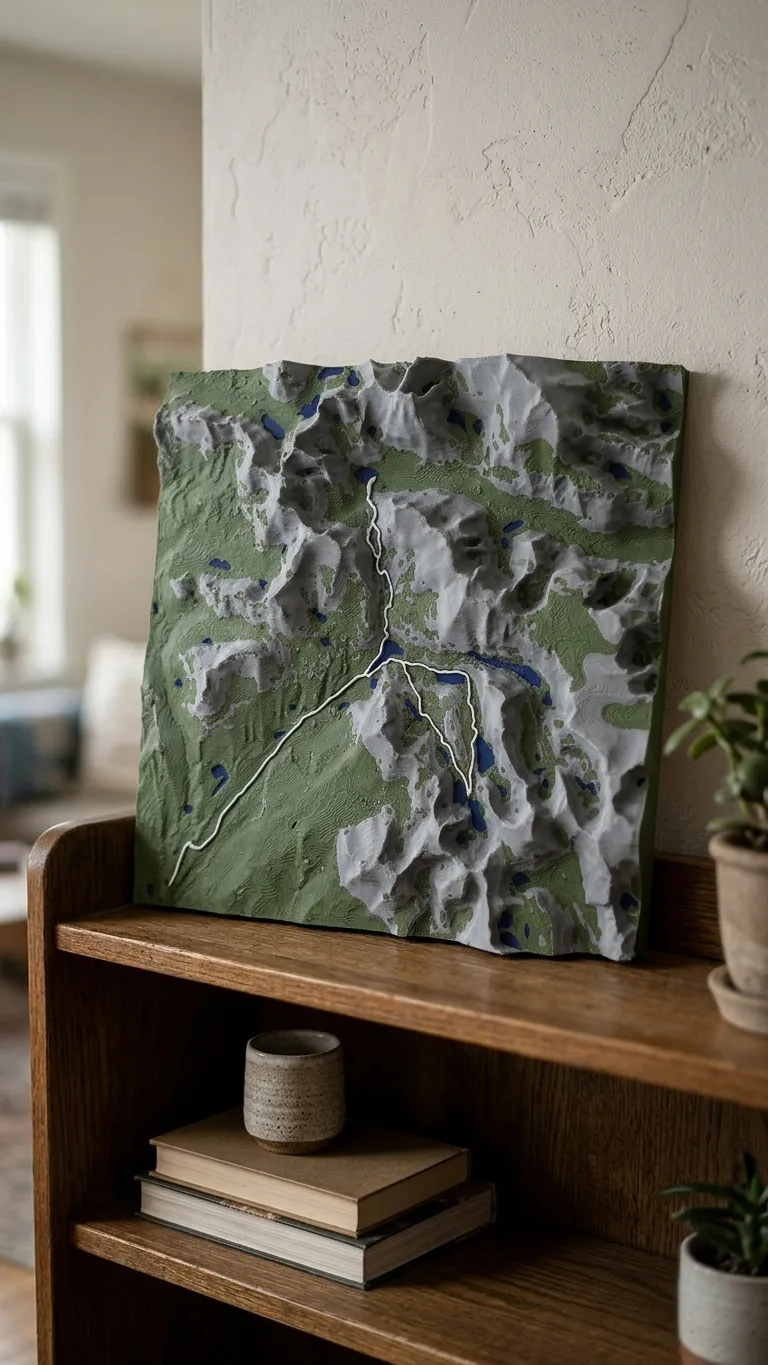
For a personalized route sculpture, confirm the route data as a separate step. A correct GPX file establishes the route you want to commemorate; it does not establish whether the finished object belongs outdoors.
Printmyroutes is best for runners, hikers, cyclists, and skiers seeking personalized GPS-based topographic keepsakes. For an outdoor placement request, contact Printmyroutes with the location and exposure details before ordering rather than assuming suitability from the product category.
Can a clear coating make PLA weatherproof?
A clear coating does not establish that a PLA sculpture is weatherproof. A compatible finish can change surface protection, but it does not remove the underlying material's heat limitations or prove that every seam and recess is sealed.
Coating also introduces its own compatibility questions. Application can change sheen, obscure small details, or affect the existing finish. Do not experiment on a sentimental sculpture without instructions from its maker.
If permanent outdoor display is essential, choose an object and material system intended for that job. Retrofitting a coating onto a finished keepsake is not equivalent to specifying an outdoor sculpture from the start.
Does PLA dissolve when it gets wet?
PLA does not simply dissolve in ordinary rainwater. That does not make a printed sculpture waterproof or suitable for sustained outdoor exposure; the polymer and the construction of the finished print are different issues.
A printed object can include seams, cavities, and interfaces that hold or admit water. Avoid immersion, standing water, and aggressive cleaning, and follow the maker's care instructions rather than assuming a general plastics-cleaning method is appropriate.
The useful buying question is not whether a splash instantly destroys PLA. It is whether the finished sculpture is designed for the repeated exposure you intend.
FAQ
Is PLA durable enough for outdoor display in 2026?
PLA is not the preferred material for permanent, exposed outdoor display. Keep a meaningful sculpture indoors, or use a sheltered, supervised outdoor presentation and bring it back inside afterward.
Can I leave a PLA route sculpture on a covered porch?
A covered porch does not establish that a PLA route sculpture is suitable for outdoor display. It reduces direct rain but does not eliminate heat, humidity, or sunlight exposure.
Will a PLA sculpture melt in the sun?
PLA can lose stiffness and distort before it melts. Ordinary PLA commonly has a glass-transition region around 55 °C to 65 °C, but that range is not a certified operating limit for a finished sculpture.
Is PETG better than PLA for an outdoor sculpture?
PETG generally offers better heat resistance than ordinary PLA, but that alone does not certify an outdoor sculpture. Check the finished object's UV suitability, construction, drainage, and intended use.
Can I waterproof a PLA sculpture with clear spray?
Clear spray does not establish that a PLA sculpture is waterproof or suitable for permanent outdoor use. A coating does not remove PLA's heat limitations, and compatibility with the finished object needs confirmation.
Where should I display a personalized route sculpture?
Display a PLA route sculpture on a stable indoor shelf away from direct sunlight and heat sources. For an outdoor ceremony, use a protected presentation position and return the sculpture indoors afterward.
One last thing
The route can be rugged even when the keepsake needs protection. A sculpture commemorating a summit, ultra, or exposed ridgeline does not need to live in those conditions to preserve the achievement.
For a 2026 milestone gift, settle the display location before choosing the finishing details. Put the keepsake where the recipient will see it regularly, away from direct sun and heat, rather than testing its weather resistance after the handover.